Thursday, 26 November 2009

The detective who dies, James Bond and birdwatching


A good number of readers of Ian Fleming’s stories already know that the name of his hero, i.e. the name of the secret agent James Bond came up almost by chance, when in the process of writing his first story, his eye fell accidentally on a book by James Bond, the ornithologist, the one who wrote the “Birds of the West Indies”.

The name appeared to him “masculine” enough and so he chose it for his hero.
From that time on, a number of anecdotal stories have circulated on the confusion of the public about the identity of the “real” James Bond. Apart from the personal charm, the cosmopolitan air and the masculine name, they do not share any other characteristic. Ian Fleming’s hero hasn’t expressed any love for nature and its observation and it is not likely that he ever will. His many adventures have not brought about any significant changes to his personality. He does not become more mature from his experiences.

He stays eternally young and virile. He is a great lover, exhausting of course the life span of the actors that impersonate him. As soon as the traces of getting on become evident on their looks, they give way to the next James Bond, who is constantly reborn from his ashes.
.


Contrary to the “undead” James Bond, the hero of Colin Dexter, one of my favourite (British) authors of crime fiction is detective Morse, who, in the course of the successive stories, grows old, gets sick – he is affected by diabetes at the age of sixty – and before retirement, he dies as we read in the final Inspector Morse novel, “The Remorseful day”.


Morse, apart from his personal charm that also makes him a great lover, has nothing else in common with Ian Fleming’s hero. He does not exercise, he is a compulsive whiskey drinker, he is an excellent cryptic crossword solver – as his spiritual father, Colin Dexter who named him after his rival in crosswords, Sir Jeremy Morse.
.
Chief Inspector Morse is educated, highly cultured, and does not tolerate spelling mistakes in a letter not even in an informal note! Apart from these passions, he has also a soft spot for the music of Richard Wagner. What has this aesthete Detective, the creation of a Cambridge literature graduate that has quit teaching due to his loss of a hearing, to do with Fleming’s secret agent?

Nothing at all, we would say. On the contrary, his traits make up the picture of the extreme opposite of the secret agent.

Nevertheless, there is something more, and this is what caused the previous bizarre associations and comparisons. It is the strange relation of Inspector Detective Morse with birdwatching and ornithology.
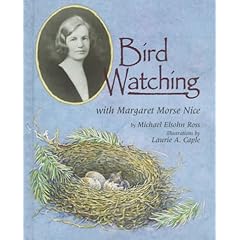
The origin of his name comes definitely from Sir Jeremy Morse, the famous cryptic crossword solver, that had been the Chancellor of Bristol university before becoming the chairman of Lloyd Bank. (This excludes Samuel Morse, the American of the 18th century, who invented Morse code!) Although Inspector Detective Morse’s “biographers” do not make any allusion to her, there is also one other famous ornithologist, sharing the name Morse: Margaret Morse (1883 – 1974), renowned for her work on the observation of the Song sparrow.

Is this a coincidence, or a conscious choice of the author that decided to proceed to an overdetermination, i.e. to name the Inspector after the crossword solver and the ornithologist as well. For this character, who is not a mere caricature and is subjected to changes and development, nothing can be ruled out.

On the other hand, the case of a coincidence cannot be is not excluded, if we take into account the pterophobia (pteron: feather) of Chief Inspector Morse, in other words his refusal to travel by plane. The Chief Inspector will have nothing to do with flying, high or low, something that is representative of the world of birds. Perhaps by mentioning feathers and flying, even to negate them, the author manages to relate them with the hero even more. This could be a hint to something else, to a deeper connection between them.

There is a scene in the first chapter of the final Inspector Morse novel, where the status quo of all the previous books is subverted. This scene depicts the swan song of Morse, when he contemplates from his window the flowers of his garden. We witness there, the radical changes in his character.

The flowers first:

The relation of Morse – a man of erudition – with flowers is ambiguous. It is determined by his “cultivated” character and embraces the knowledge of their names, as well as their position and their importance in the works of the great poets. This, together with their mythological symbolism, make “the violets that are easily fanned”, or the “globed peonies”, or the meadows with daffodils familiar to him But the relation ends here! Do not ask him to recognize real flowers in a garden. His flowers are the flowers of literature.

Morse in his maturity, becomes aware of this deficit in the contact with the real world and decides to fill in the gap. This will be done by attempting not to observe the world of flowers but the world of birds.

Thus, at a mature age, he decides to engage in the observation of the world of birds. He even thinks that if he could be reborn, he would prefer to be an ornithologist.
For him “life would be poorer if birds would cease to sing”. This is what the man who used to enjoy listening to Wagner, wholeheartedly admits. He makes a subscription to “Birdwatching” and borrows RSPB Birdwatcher’s Guide from Summertown Library. He buys the necessary equipment, binoculars and seeds in order to attract the birds in his yard. It goes without saying that this enlightenment and love for nature will not be able to get Chief Inspector Morse out of his house.

This is how the last novel with a living Chief Inspector Morse starts, in his new capacity as a birdwatcher, giving new meaning to his name and unexpected turns to the plot. The mention of the song of the birds is a tribute to the song sparrow and the renowned – although unknown to the general public - American ornithologist Margaret Morse, who was born in Amherst – Massachussets, where Emily Dickinson, confined to her gardens, had lived. Margaret Morse contributed in a unique way to the study of bird and child behaviour since she managed to extend her results from the observation of birds to the study of language acquisition of children.

If Colin Dexter, the writer, was not so much a man of letters, we would be absolutely certain that Morse’s naming is mere coincidence. We now think that it might rather be a literary construction, set up by the author of the book. Or is it not?

Nevertheless, we can trace some clues in this case that are leading us beyond a witticism expressed just to parallel – even in retrospect – Morse’s naming with that of James Bond’s. As if detectives and secret agents were meant, to be named after famous ornithologists!

What are these clues:

In the first chapter, we witness a representation, a correspondence of the small gardens of Oxford with the gardens of Amherst made in a masterly manner. This is done by mentioning the famous verses of Oscar Wilde, “a little tent of blue/that prisoners call sky” from “The ballad of the Reading Gaol” in relation with the small gardens of Oxford, as seen by a person confined in his house.


The confinement and the gardens of Oxford is an allusion to the confined poet in the gardens, but this poet is Emily Dickinson of Amherst and from there, the ground is prepared for the Amherst lady of the birds, ie Margaret Morse.
From his garden of Oxford, the confined Inspector Detective – poet, realizes as he advances towards the end of his life that from now on, he will not only read but he will observe. In a way, he never used evidence for his detective work. He heard people’s stories and was drew conclusions – without direct participation - by exhausting the power of his mind, making random connections and analyzing what the witnesses testified and the narratives of his assistants as well.
With this new need for a change, expressing his need for a second chance, to live as an ornithologist – a bird watcher – the mortal Morse recovers a new, a deeper relation with his name and with the core of his existence.

PS
I came across a reference to a book about Detective Morse, just before uploading the English version of this post. I have not yet read the book but I am sure that it must be very revealing, since … it is about Detective Morse.
Nevertheless, I am writing about it right now, because of the name of its author. The title of the book is “The World of Inspector Morse: London, MacMillan, 1998” and the author is: Christopher Bird!!!


Sources:
http://www.telegraph.co.uk/culture/film/jamesbond/5320004/Bonds-unsung-heroes-the-original-James-Bond.html

Images :

http://fatfinch.files.wordpress.com/2009/08/birds.jpg
http://en.wikipedia.org/wiki/File:Fleming007impression.jpg
http://www.ilike.org.uk/images/james-bond-pan.jpg
http://i.telegraph.co.uk/telegraph/multimedia/archive/01403/james-bond-ornitho_1403072c.jpg
http://www.diabetes-stories.com/img/interview/50/50.%2001%20Colin%20Dexter%20around%20time%20of%20diagnosis,%20with%20actor%20John%20Thaw,%20who%20played%20Inspector%20Morse.jpg
http://www.red-disability.org/famous-modem/ColinDexter.jpg
http://www.roksan.co.uk/images/morse.jpg
http://upload.wikimedia.org/wikipedia/en/thumb/2/26/Inspector_Morse.jpg/250px-Inspector_Morse.jpg
http://www.fantasticfiction.co.uk/images/n11/n57144.jpgm
http://images.shopping.indiatimes.com/images/product/101544_The-Remorseful-Day_pbilimage1.jpg
http://www.poetseers.org/the_great_poets/british_poets/oscar_wilde/oscar-wilde-pic.jpg
http://www.writespirit.net/authors/emily_dickinson/Emily%20Dickinson.JPG
http://farm1.static.flickr.com/72/186707426_c017614e58.jpg?v=0 http://www.buffaloinbloom.com/Gardens09/1071%20Amherst.JPG
http://images.google.com/hosted/life/l?imgurl=f3c9c0eedef8a0b8&q=Margaret%20Morse%20Nice&prev=/images%3Fq%3DMargaret%2BMorse%2BNice%26hl%3Del%26lr%3D%26rlz%3D1G1GGLQ_ELGR258%26sa%3DN%26um%3D1
http://ecx.images-amazon.com/images/I/51SXADR2J1L._SL500_AA240_.jpg
http://iamnotamorningperson.files.wordpress.com/2009/03/hpim0436.jpg
https://blogger.googleusercontent.com/img/b/R29vZ2xl/AVvXsEg01APst-m3SnyWHN57pmMUMl_lifXwSB16wrpNHJ8_4qaKZbed0tDuu8KaxWe6Jw8ERjQzC_WXAGVbsOXXN92bvnPupeU78zZhUyEFZyJAHZKqF4fIWVGYv8vrc8TtCxW_7AbJUOxc5JA/s400/James-Bond.jpg
http://www.topnews.in/light/files/James-Bond.jpg
http://sportsmansdaily.com/afterdark/wp-content/uploads/Roger-Moore-James-Bond-.jpg


Posted by Poly Hatjimanolaki, Athens, Greece

Friday, 13 November 2009

The dead princess in the medieval castle of Limassol


The story of Theseus and Ariadne is a double story of deception. She betrayed both her father and her brother because she has been blinded by her love for the Athenian ephebe. On the other hand, although on escaping the labyrinth he took her with him in his ship on the way back from Crete, he has irresponsibly abandoned her on the island of Naxos. There she met Dionysos, the one that had always loved her and was competing for her from the beginning. In another version of the story, Theseus abandoned Ariadne in Cyprus, although she was pregnant and carrying his child. She was left to the care of the women of Amathous, a city located on the southern coast of the island, twenty five kilometers to the east of contemporary Limassol. Ariadne waited for Theseus, she waited and waited in vain for him to come back. Tradition says that the women of Amathous, to comfort her, told her that her beloved was expected to come at any moment. They said that he had sent her a letter with a sailor whose boat got shipwrecked and thus the letter was lost in the waves…


Ariadne waited until the time came to give birth to her child. Unfortunately she died during labour. For her death people say that “the arrows of Artemis found her”. Artemis’s arrows, according to Homer, bring a sudden death to women in labour.
The sad story of this Ariadne ends here. Nevertheless, the inhabitants of Amathous, did not want to forget the princess from Knossos, cast by her fate on their island. They began to honour her with a strange ritual that was, nevertheless, not so unusual for the morals of antiquity. This ritual made Plato of classical Athens uncomfortable and for this reason he had forbidden it in his “Republic”.
In an Ideal City, according to Plato, men are not allowed to imitate women in labour. This is a ritual that some societies in Australia and Africa may still practice. It is called “couvade”, male – labour, where a man imitates the labour pains. This is what the inhabitants of Amathous decided to do, to remember Ariadne – Afrodite by, the Princess that had honoured them by going into labour and dying in their city. This is mentioned by Plutarch in his Theseus and this is how the information has reached our era.

The pregnant woman, a sacrosanct person in greek tradition, still figures in the poems of Oria castle. Oria (Orea: beautiful in Greek) castle is a labyrinthine castle – city, taken by treachery, according to the study of the Greek anthropologist Panagis Lekatsas. During the siege of an inexpugnable fortress the traitor appears: A pregnant woman asking for shelter, a young man in disguise.
The inhabitants of the besieged city – castle yield to his/her plea and open the castle gate. This is their destruction. We should not forget that the Troyan horse, the symbol of treachery that contributed to the capture of Troy, was in a way pregnant with the Achaeans, since they were hidden in his belly.

I was in Limassol last year. I did not see the traces that the order of myth might have left in ancient Amathous.
The story of Ariadne’s death and the strange gesture of the inhabitants of Amathous was constantly in my mind. I have carried this story with me for many years, ever since I was engaged in a study of labyrinths and the strange dance – map of the labyrinth, the crane dance. The crane dance, taught by Dedalus to Theseus companions on the island of Delos, shows the way out, if you are in the labyrinth. It is a map – choreography.

Ariadne’s death is dark, but always present. I cannot forget her.


The visit to the Medieval castle of Limassol, reminded me unexpectedly of the Cretan Princess. Among the burial stones of the knights and monks exhibited in the museum, there is one dedicated to a woman. She must have been of noble descent, since she was buried in the castle yard. One cannot discern very well the engravings on the stone, but there is a framed drawing next to it to help the visitor that has not a “trained” eye to see the baby that she carries in her belly clearly. The dead princess is pregnant and she deserves a burial stone. Like the women in Kerameikos cemetery in Athens that had died in labour. Like Ariadne.
Posted by Poly Hatjimanolaki, Athens, Greece

Friday, 30 October 2009

Walt and Sir Walter, Paul Auster and Paul Benjamin: absorbing an invisible brother


That’s how Paul Auster was taken by the study of the figure of Sir Walter Raleigh, the British poet and adventurer that had charmed Queen Elisabeth and introduced – as people say – tobacco in England. His aim was to embody all the properties of Sir Walter into his person and he did so, by encasing the narratives for Sir Walter into his stories.

“Sir Walter Raleigh was the most perfect man who ever lived ”

says Aesop, in Paul Auster’s novel “Vertigo”. Aesop, a little boy from Ethiopia, tells stories to Walter Rawley who is a nine year old boy, whose name is homophonic to that of the English noble man. In “Vertigo”, little Walt, taught by the mysterious teacher Master Yechudi, will practice the art of flying and will violate the laws of nature. This violation will be the result of a painful apprenticeship and a moulding of little Walt in Master Yechudi’s hands. This reshaping takes place from nothing, or in better words from the rough prima materia of his previous existence. This looks like the making of Pinocchio by the hands of Master Gepetto. The analogy of this book with the story of Pinocchio is stressed by Paul Auster himself in an interview for the Greek National Television (1). Little Walt corresponds to Pinochio, Master Yehuddi to Master Gepetto and Mrs Whitherspoon to the Blue Fairy.

While Master Yechudi was modeling his body, Aesop, the little Ethiopian boy, was moulding his character towards perfection.
According to Aesop, Sir Walter Raleigh had been

“The best poet of his day; he was a scholar, a scientist, and a free thinker; he
was the number one lover of women in all of England”
The above, are the qualities of the most perfect man, the model character.

Little Walter, listened to the sweet voice of Aesop, taking a rest from the strenuous exercises he was being submitted, to master the ability to fly. Aesop’s voice unfolded the hundreds of stories that the boy had in his mind. Thus, Walt learned about Sinbad the Sailor, Jack the Giant Killer, Wandering Ulysses, Billy the Kid, Paul Bunyan, Lancelot and King Arthur. Most of all, he was captivated by the figure of the 16th century hero that had the same name as himself. Aesop, to prove that he wasn’t making it up, had shown him his picture:
Showing the picture of Sir Walter to Walt triggers a strange process of character moulding. Ever since, little Walt begins absorbing the image of Sir Walter. By observing it, he starts embodying all its properties, as if carrying an invisible brother inside him.
In his own words:

“I remember how shocked I was when he told me I had a famous name, the name of a real-life adventurer and hero. To prove that he wasn’t making it up, Aesop went
to the bookshelf and pulled down a thick volume with Sir Walter’s picture in it.
I had never seen more elegant face, and I soon fell into the habit of studying
it for ten or fifteen minutes every day. I loved the pointy beard and razor
sharp eyes, the pearl earring fixed in his left lobe. It was the face of a
pirate, a genuine shashbuckling knight, and from that day forth, I carried Sir
Walter inside me as a second self, an invisible brother to stand with me through
thick and thin.”


The story of Sir Walter Raleigh is repeated in Paul Auster’s movie “Smoke”. In “Smoke”, Paul Benjamin - a writer - is a regular in Auggie Wren’s tobacco shop and both enjoy each other’s company.
Paul Benjamin’s name and surname come from Paul Auster’s name and middle name (Paul Benjamin Auster is the writer’s full name).
The story of Sir Walter Raleigh is recounted by Paul Benjamin: In this case, instead of Walt Rawley, it is Paul Benjamin - the writer’s alter ego – that feels the admitation towards Sir Walter Raleigh. Paul Benjamin says that Sir Walter has been the one who called Queen Elisabeth I “Bessie”. He would bet that the Queen had definitely smoked a couple of cigars with him in the royal court. A patron of the tobacco shop breaks in the conversation and mentions the incident with the cloak: It was Sir Walter’s cloak that he himself had laid on the ground, over a pothole full of mud, in a chivalrous gesture, to protect the Queen from soiling her dress.


The scene with the cloak and the puddle is shown in the movie “Elisabeth, the Golden Age” where we witness the strange attraction that Sir Walter (Clive Owen) exerted on the Queen, as well as his secret marriage with her Lady of Honour, who – incidentally - had the same name as the queen: Bessie. What a coincidence with the names this is! Or rather a merging of identities?


Walt – Walter
Paul Benjamin – Paul Benjamin Auster
Elisabeth – “Bessie”

Nevertheless, it is not only the chivalrous behaviour of Sir Walter Raleigh that touches Paul Benjamin (Auster). It is his scientific curiosity and his effort to weigh the smoke – “It is as if you want to weigh the human soul” – he and Augy Wren, the owner of the tobacco shop, remark.


With a metaphysical boldness, Sir Walter attempts to weigh a cigar before and after smoking it, so that by subtracting the weight of the ashes from the initial weight of the cigar, he might measure the weight of this delicate substance, responsible for the “sober” exhilaration, “the liberation from all thoughts” as Alvaro de Campos(*) recounts in the Tobacco Shop (La Tabaccaria).

The relation between Fernando Pessoa and Paul Auster will be the subject of another post. For the moment, our thoughts are solely with Sir Walter Raleigh, the adventurer, the explorer, the founder of the colony of Virginia, the favourite man of Queen Elisabeth, imprisoned for so many years in the Tower of London, the man who spoke so bravely to the executioner. (2)

They say that in one of his expeditions to the mythical city of Eldorado, he had gotten lost, or he had lost the map of the colony of Roanake. This loss cost him his freedom again. In fact, he had been released from the Tower of London in order to take part in this expedition. Captain John Smith from Willoughby had also been involved in that expedition. Captain John Smith was the one with whom Pocahontas, the daughter of the Algonquin chief, in the area that was to become the colony of Virginia.


“Aesop recounted the story of the cloak and the puddle, the search for Eldorado,
the lost colony at Roanoke, the thirteen years in the Tower of London, the brave
words he uttered at his beheading. He was the best poet of his day; He was a
scholar, a scientist, a free thinker, he was the number one lover od women in
all of England. “Think of you and me put together”, Aesop said, and you begin to
have an idea of who he was. A man with my brains and your guts, and tall
and handsome as well – that’s Sir Walter Raleigh, the most perfect man who ever
lived”

The workshop of encasing makes a synthesis of all narrations, takes a little bit of you, a little bit of me, and creates a unique perrsona: Paul Benjamin Auster, the tall and handsome adventurer, the writer.


(*) Alvaro de Campos is one of Fernando Pessoa’s heteronyms.

(1)
http://us.penguingroup.com/static/rguides/us/me_verigo.html

(2) He was decapitated despite having a high temperature. Since he was quivering from his fever they say that he told the executioner: “Let us start. I do not want people to believe that I am trembling from fear” He was allowed to see the cutting edge of the axe. He said: “This is indeed a strong medicine. It is sharp but efficient”


(1)
Κεραίες της εποχής μας - Paul Auster.

(2) He was decapitated despite having a high temperature. Since he was quivering from his fever they say that he told the executioner: “Let us start. I do not want people to believe that I am trembling from fear” He was allowed to see the cutting edge of the axe. He said: “This is indeed a strong medicine. It is sharp but efficient”

Sources :
http://us.penguingroup.com/static/rguides/us/mr_vertigo.html

http://en.wikipedia.org/wiki/Walter_Raleigh
http://www.bbc.co.uk/history/historic_figures/raleigh_walter.shtml
http://www.williamsburgprivatetours.com/The%20Lost%20Colony.htm
http://media-2.web.britannica.com/eb-media/88/83388-004-CCD928C2.jpg

Posted by Poly Hatjimanolaki, Athens, Greece

Thursday, 15 October 2009

When Ngugi wa Thiongo was awarded the Nobel Prize in Literature 2009, i.e. in a different world…


Ngugi wa Thiongo, the Kenyan novelist, the theorist of post – colonial literature, the one that in middle age abandoned his Christian name «James» in order to take back the traditional «Ngugi», lies in his bed in the presidential suite of the Grand Hotel Sheraton in Stockholm. His wife Njeeri is on the sightseeing tour organized by the ladies of the Public relations of the Academy, in the Old City, Gamla Stan.


The Public relations officer showed a lot of understanding when the distinguished professor of English and Comparative Literature at the university of California, Irvine, declared that he would rather spend a quiet afternoon, alone in his hotel. The trip from across the Atlantic had worn him out, and these people showed that they honestly respected his frame of mind. He was in a mood for recollection.


He likes the Swedes. They are smiling, polite, discreet. He has spent a whole year in this country – when was that? – in 1986, in order to study film at the Dramatiska Institute of Stockholm. He remembers the smiling faces in the subway, the blond young men with the long coats and the caps on their heads helping him to lift his suitcase. They had in fact invited him to their club, where he had given a talk about his book. Twenty years had passed since his first novels “The river between”


and “A grain of wheat” had appeared. He was already known in Europe: A writer, a professor of literature – expelled nevertheless from the university of Nairobi for his political beliefs. His book “The devil on the cross”


published in the English language in 1982 had entirely been written in prison, on toilet paper. He had been imprisoned by the authoritarian regime of Arap Moi because he had decided to write and present in Gikuyu (the language of the Kikuyu ethnic group) his theatrical play “I will marry when I want”.


“Why was I not detained before when I wrote in English?”(*), he thought. “ It reminds me of my childhood, when the teacher had caught us not speaking English at school and forced us to stick a sign on our backs, saying “I am an ass”. As a result, many children, especially the girls, afraid that they might forget themselves and speak in heir mother tongue, started to speak English even outside school.


Mau Mau history was always an inspiration to me. I am amazed at how a people who didn’t even have neighbouring bases could sustain a struggle for years. I have come to admire the courage (*)
I have written a theatrical play entitled “The trial of Dedan Kimathi” about the arrest, the trial and the execution of their leader, even though he was sick and with a high temperature.


In my novels written shortly after the independence, I have described what happened in the concentration camps where the British occupation forces have enclosed, using barbed wire, entire villages. All these literary descriptions, are nothing compared to what Caroline Elkins


from Harvard university discloses in her book “Imperial Reckoning” (or “Britain’s Gulag”). Perhaps it is the mention to Gulag that sensitized the Academy and they offered me the Nobel Prize. They are very sensitive to the persecution of dissidents and political refugees. It is not by accident that Solzhenitsyn, that talked about the Soviet Gulag also, received the Nobel prize in Literature.”


Anyway, Ngugi’s case is completely different. Who cares about the ex- socialist countries of Eastern Europe? It is said that even the bloodstained state of Ceauşescu collapsed due to the forged pictures of dead people circulated by the secret services of the West…

The prison book is one of his favourites.


He managed to achieve the delicate balance between political commitment and the search for a new literary form, using traditional means. This novel that was written like an epic poem, is an allegory built with Kikuyu proverbs and riddles.

And now, after twenty years, he finds himself in Stockholm again. He has missed the long walks in Skansen Zoo. He remembers walking there alone, deep in his thoughts, with his head bent towards the ground.
The gathering of the animals at Skansen come to his mind: the animals have arrived in order to watch the famous crane dance.


He had been a witness of this dance in his country, Kenya. The Dane Baroness Karen Blixen in her book “Out of Africa” had described this circular dance with admiration. It was the same dance that the Swedish teacher Selma Lagerlöf - also a Nobel Prize in Literature – saw through the eyes of her hero, in “The wonderful adventures of Nils Holgerson”.


Skansen with its cranes reminded him of Africa.


These birds travelled to the South, as far as his homeland, back to his childhood years at Kamandara, Manguu and Kinyogoro.


And now, the writer whose books are read aloud in the cafés, the villages and the matatus of Kenya, the writer who decided to write in his mother tongue, is here again, in his favourite city. Tomorrow, the Nobel prize in literature, the greatest literary distinction, will be awarded to him.

The text of his speech, translated in English, is already in the hands of the committee. He has decided to deliver his speech in the Concert Hall, in Gikuyu. The language of his tribe, the language spoken in the country of the “dispossessed”(**) will resound on its golden walls.

Ngugi wa Thiongo will speak on behalf of the entire continent. He will speak on behalf of his dead brother who was killed during the Emergency. He was deaf and mute and could not hear the English soldier ordering him to stop.

He will speak on behalf of his other brother who participated in the Mau Mau uprising and was killed in a clash with the colonial occupation forces. He will speak about the messages sent by this brother to little Ngugi, he was called James then, urging him not to drop school. “He was obsessed with my education”, he will tell the audience tomorrow.

His books are well known. They have been are translated into thirty languages. Since 2002, they are already being published in Penguin Classics.


The eighteen elders of the Academy– some of them might have been the blond Swedes with the long coats that he had met twenty years ago - made a wise decision with their choice. They did not lay emphasis on any influences from the Heart of Darkness and the generally agreed truth of the cruelty of a colonial occupation that might have inspired him. They did not lay emphasis on his Marxist – Fanonist beliefs and his unlimited optimism, as in Brecht’s poetry, that people can change the conditions of their lives. The wise people of the Academy have honoured in his person his language, the return to the mother tongue that made his work reach the reader.


“It is not worthwhile talking about” Ceauşescu and Waffen SS (**)


(*) The outsider, Maya Jaggi interviews Ngugi wa Thiong’o, in http://www.guardian.co.uk/books/2006/jan/28/featuresreviews.guardianreview13/print
(**) According to the Press release of the Swedish Academy, the Nobel Prize in Literature for 2009 is awarded to the German author Herta Müller,

“who, with the concentration of poetry and the frankness of prose, depicts the landscape of the dispossessed”


(***) According to the Press release of the Swedish Academy, that decides to whom the Nobel Prizes should be awarded, the German author Herta Müller was dismissed from her job during Ceauşescu’s dictatorship and was harassed by the Securitate, while her mother, like many other German – Romanians were deported to the Soviet Union. Her father had served in the Waffen SS during World War II.


According to the wikipedia, Suaves, the German minority of Romania, that had been finally deported by the Soviets after the war, had founded during the war the infamous “7th SS Volunteer Mountain Division Prinz Eugen” http://en.wikipedia.org/wiki/Banat_Swabians and http://en.wikipedia.org/wiki/7th_SS_Volunteer_Mountain_Division_Prinz_Eugen


Images:
http://www.learner.org/jnorth/images/graphics/c/crane_dance4_notext.jpg


Posted by Poly Hatjimanolaki, Athens, Greece

Tuesday, 6 October 2009

A case of identity: Sherlock Holmes, the worn typewriter and the hidden signature of the Persian poet Hafez.


The “Case of identity” by Arthur Conan Doyle first appeared in the Strand Magazine in 1891 and it is considered to be, despite its evasive and “dry” title, a corner stone in detective novel history. It is appreciated not only by the admirers of this unappreciated genre and Sherlock Holmes devotees, but by specialists of crime detection and forensic science as well. The latter pay tribute to the inductive way of thought and to the use of traces and imprints left by a criminal action initiated by this story. One can find references to it in Criminology and Police Science papers nowadays as well. (1)
The reader is amazed by the multiplicity of meaning and interpretations of “identities” revealed (or concealed) in a masterly manner in this story. One of them, I believe, is the Identity of the legendary hero himself, who is merged with its double, Hafez, the Persian lyric poet of the 14th century.

But first things first.

The “Case of Identity” appears to be a common Sherlock Holmes story. The client who pays Sherlock Holmes a visit, and whose identity as a person who is short sighted due to “so much typewriting” is revealed at a first glance by the detective, is Miss Mary Sunderland. Miss Sunderland is a woman, who despite the substantial income from the interest of a fund set up for her by her father, carries on earning a living by practising the profession of the typist.
In spite of the close supervision of her stepfather, she gets engaged to a quiet office clerk from London that has captivated her affections. Nevertheless, the fiancé disappears mysteriously before their wedding.


Miss Sunderland, full of anxiety turns for help to the brilliant detective, in order to find her fiancé.
At the end, it expires that the missing fiancé is the “double” of her stepfather, Mr. Windibank. Driven by the fervent desire to prevent his stepdaughter from marrying so that he can carry on exploiting her income, Mr. Windibank disguises himself into a bespectacled man with a moustache, and pretends to be Mr. Hosmer Angel, the would – be fiancé. The fact that Mr. Angel shows up when the stepfather is absent, the glasses and the moustache that cover his face and his strange voice make the discerning reader suspicious for a trap set by the author. The traces are clearly marked in order to highlight the gullibility of Dr. Watson, who cannot see through them.

The metaphorical meaning of the “Case of Identity” is not exhausted in the Identification of the fiancé with the stepfather, but it extends to the Identification of the letters that the unfortunate Miss Sunderland receives from him.

"they are very commonplace. Absolutely no clue in them to Mr. Angel, save that he quotes Balzac once”
The absence of personal style and the typewritten signature conceal the identity of the author of the letters which is found in the identity of the prints of the typewriter: A revolutionary idea in forensic science

“ In each case”,
Sherlock Holmes proudly declares,
“not only are the "e's" slurred and the "r's" tailless, but you will observe, if you care to use my magnifying lens, that the fourteen other characteristics to which I have alluded, are there as well."

Tracing and identifying the typewriter on which the alleged suicide note is typed is a common element of the plot in subsequent detective novels. Nevertheless, in the “Case of Identity” it is introduced for the first time.

There is one more reason for which the “Case of Identity” will go down in history. Although Sherlock Holmes solves the mystery, he chooses not to tell his client the truth about the “missing” fiancé, because he does not want to deprive her of her delusion.

“You may remember the old Persian saying, "There is danger for him who taketh the tiger cub, and danger also for who snatches a delusion from a woman." There is as much sense in Hafiz as in Horace, and as much knowledge of the world."

The enigmatic reference to the Persian lyric poet of the 14th century Šamsu d-Dīn Muhammad Hāfez-e Šīrāzī (2) at the end of the story is unexpected to those familiar with the prosaic nature of the detective. Nevertheless, Hafez is not a common poet. He is the one that knew the Qu’ran by heart. That is in fact the meaning of the name Hafez, and this was the name that the poet had chosen for himself. He had not only memorized the Qu’ran, but he also knew by heart the verses of his beloved poets Jalal ad-Din Rumi and Saadi.
The relation between Sherlock Holmes’ extraordinary capacity for memorizing and Hafez emerges. “Neither fascinating nor artistic” is the reference made to the police reports, in the beginning of the story, when the method of inquiry of the detective is mentionned: the search of the analogy of relevant elements of a case with corresponding aspects from other cases, that he has already solved and registered in his memory or can be found in police records. However his is a a meticulous job, done with style. A metaphor for poetry perhaps.

If the allusion to poetry as mnemonics is not yet convincing for the identification of Hafez as the “double” Sherlock Holmes/Hafez, let us take one more step towards poetry. Let us remember how the story begins. There is an unusual poetic mood of the hero, when Dr. Watson and Sherlock Holmes are in a reverie and discuss the mysteries of life. That mood puts quoting Hafez quite in the spirit of the time. After all, it was at that time that Gertrude Bell had translated the poems of Hafez in English. These poems were well received in the literary circles of Great Britain and Europe. Carlyle used to read them as well as the friends of Virginia Woolf’s father, as she writes in her diary.

This is how the Case of Identity starts, and it is in a poetic mood indeed:

"…life is infinitely stranger than anything which the mind of man could invent. We would not dare to conceive the things which are really mere commonplaces of existence. If we could fly out of that window hand in hand, hover over this great city, gently remove the roofs, and peep in at the queer things which are going on, the strange coincidences, the plannings, the cross-purposes, the wonderful chains of events, working through generation, and leading to the most outre results, it would make all fiction with its conventionalities and foreseen conclusions most stale and unprofitable."

Nevertheless, there is more that in my opinion, points in the direction of a hidden signature, of a key that embraces all the identities/identifications in the story: The identification of Mrs. Sunderland as a typist, the identity of Mr. Windibank as Mr. Hosmer, the identity of his commonplace letters, and at the end the identity of the worn typewriter through the detailed examination of the imprints of the letters, the final imprint of the criminal, his real signature.

The multiplicity of identities revealed with intellect and style is the core of the story. They are characteristic of the masterly manner in which Sherlock Holmes solves the case and the author weaves the plot.

Similarly, Hafez, the poet, signs his poems with a nom de plume, in his priestly capacity. He has, as the poets of his era have, the habit of weaving his name into the last verses of the poems that he composes, like a unique signature. The identity of the poet is hidden in his verses, just like the slurred e's" and the tailless "r's" of a worn typewriter :

Am I a sinner or a saint,
Which one shall it be?
Hafez holds the secret
of his own mystery...

Or

I said, happiness and joy
Passing time will destroy.
Said, Hafez, silence employ
Sorrows too will end my friend.

“Fascinating and artistic” I believe.

(1) Stanton O. Berg, Sherlock Holmes: Father of Scientific Crime Detection, Journal of Criminal Law, Criminology and Police Science, Vol. 61, No 3, p. 446 – 460
(2) http://www.hafizofshiraz.com/hafizinfluence2.html
(3) http://en.wikipedia.org/wiki/Hafez
(4) The excerpts were from the electronic edition: http://sherlock-holmes.classic-literature.co.uk/a-case-of-identity

http://cache1.bigcartel.com/product_images/3040394/strand.jpg

Thursday, 24 September 2009

The pensieve and the traps of memory


Can you picture a stone basin with strange engravings around the edges – runes and other mystic symbols? A silver light is emanating from inside. You cannot figure out whether its content is liquid or gas. It looks like liquefied light or solidified gas, bright and silvery white, continually whirling around, in an endless dance.
Its surface is agitated like feathers in the wind. It resembles the clouds swirling around, taking various shapes.
If you attempt to touch it, the silver surface starts rotating at a tremendous speed and becomes transparent like glass. You can see through its surface, as if you were an invisible observer, scenes from the previous life of the owner of the basin. The scenes appear like animated images in a crystal sphere, like a blurred projection on a screen.

This basin is the magician’s pensieve and it has been invented by the author of Harry Potter’s adventures, Joan K. Rowling. At moments where the wizard feels that there is a great jostle of thoughts in his mind, he transfers, he “transfuses” some of his thoughts into the basin, in order to examine them later, taking his time. He touches the tip of his wand near his temple, and the wand extracts, as if hitched on it, a strand of silver threads. The strand is from the same bright silvery – white substance and takes its place in the basin.


In order to recollect a particular thought, he sieves the bowl like a gold digger would, he stirs it and the thought he is looking for starts swirling, taking a particular shape.


A container to store thoughts, reminds me at first of the “brain – attic” metaphor for memory, used by Sherlock Holmes in the “Study in Scarlet” of Arthur Conan Doyle:


“A man's brain originally is like a little empty attic, and you have to stock it
with such furniture as you choose. A fool takes in all the lumber of every sort
that he comes across, so that the knowledge which might be useful to him gets
crowded out, or at best is jumbled up with a lot of other things so that he has
a difficulty in laying his hands upon it. Now the skilful workman is very
careful indeed as to what he takes into his brain-attic”


The pensieve could have been a fascinating metaphor for memory and thought, if it did not intrinsically hide, as I will try to convince you in the following paragraphs, a disparagement of the faculty of memory. It is in fact a trick, by which the art of memory and recollection is transformed into a “time – machine”.
It is not the first time that Mrs. Joan K. Rowling uses magic objects in her books in order to account for events that have happened before the birth of her hero, Harry Potter. In the Chamber of Secrets it is the diary of Tom Riddle that allows whoever writes in its pages to “connect” with the memory of the trapped Tom Riddle, experiencing Tom’s memory as his own. (See also Magical objects in Harry Potter (http://en.wikipedia.org/wiki/Magical_objects_in_Harry_Potter )

The same holds with the memory of Dumbledore. Harry Potter has access to somebody else’s memory without the integrity of the headmaster being at stake. The teacher is not forced to reveal an important secret to his pupil. Instead, his memory is stored in the pensieve – a kind of animated akashic records http://www.spiritmythos.org/TM/akashic/akashrec.html - - and is of an objective nature: Thoughts and memories are not processed, arranged or organized. They are stored “elsewhere” to avoid jostling in the inelastic walls of Dumbledore’s brain. When another person recollects them from the pensieve, it is as if he re - calls and re –vives the past. In doing so, he can sometimes notice events or aspects that the person who had stored them in the first place had not noticed.

This has been confirmed by the author herself in an interview (cf:http://www.mugglenet.com/jkrinterview3.shtml).


JKR: It's reality. It's important that I have got that across, because Slughorn gave Dumbledore this pathetic cut-and-paste memory. He didn't want to give the real thing, and he very obviously patched it up and cobbled it together. So, what you remember is accurate in the Pensieve.
[…]
“MA: So there are things in there that you haven't noticed personally, but you can go and see yourself?
JKR: Yes, and that's the magic of the Pensieve, that's what brings it alive.
ES: I want one of those!
JKR: Yeah. Otherwise it really would just be like a diary, wouldn't it? Confined to what you remember. But the Pensieve recreates a moment for you, so you could go into your own memory and relive things that you didn't notice at the time. It's somewhere in your head, which I'm sure it is, in all of our brains. I'm sure if you could access it, things that you don't know you remember are all in there somewhere”


“Confined to what you remember”, means that human memory is imperfect, not only in the sense of its capacity to contain many events and thoughts, but in the sense of its subjectivity and selectivity. There are latent aspects of memory, hidden in the unconscious which - sometimes – through therapy can be revealed. The operation of the pensieve, abrogates the subjectivity of this selection. Selecting is not a flaw, since it reveals for the observer what has been concealed by the observed,

Honestly, based on the above, I do not think that the “real thing” is indeed real. It is rather a clever invention of the narrative that created the manipulated receiver of a trapped soul hat deceives the receiver by transforming him into a reader over one’s shoulder. Nevertheless, the enchantment of eavesdropping is lost, since what you hear (or what you read) is not what the other person remembered, what impressed him, what he decided to recollect or how he reconstructed the past.
He could communicate this to you by telling you a story. The access to the pensieve is only offering an accurate record of past reality, a Deus ex machina that makes up for the needs of the narrative. In any case, it is not a way to reach out the Other.

Images:
http://treesflowersbirds.files.wordpress.com/2008/12/pensieve31.jpg
http://playstationlifestyle.net/trophies/data/NPWR00530_00/TROP002.PNG
http://nando67.files.wordpress.com/2009/07/dumbledore_pensieve.jpg
http://www.ajaxian.com/archives/ajaxian-harry-potter.jpg
http://www.sherlock-holmes.com/Jerry%20Faces%2011_10_2005_nonames.jpg
http://harrypotter.ugo.com/images/magical-items/pensieve.jpg

http://www.peterysussman.com/wp-content/uploads/rowling.jpg


Posted by Poly Hatjimanolaki

Thursday, 27 August 2009

A cat "of" the British Museum


...and its name is: Gayer-Anderson cat.

The cat with golden earrings on its nose and ears - "piercing!!!" - shouted a group of young tourists from Manchester who were taking photos - just as we were, during our visit in the Egyptian sculpture hall of the British Museum. This bronze statuette of 600BC honoured Bast, the ancient Egyptian goddess of cats.

Nevertheless, the name Gayer-Anderson sounds strange.

The naming reminds me of the Parthenon Marbles, which were once called Elgin Marbles. (cf. ‘What are the Elgin Marbles?’)
After all, the Parthenon marbles were named Elgin marbles after Lord Elgin, the ambassador of the British Empire at the Ottoman court in Istanbul. “He acquired (sic) the sculptures in Athens between 1801 and 1805” (7) and sold them to the British Parliament, which in turn decided to offer them to the British Museum.


Don’t worry, through this post, I am not attempting to request the restitution of the Parthenon Marbles in Greece. I agree with Helen Hontolidou when she writes in her blog: “we did not come here to receive them like a parcel from the museum and carry them home. We do not even agree among us, if we actually want them back.”
I could nor agree more (with the disagreement). I believe that the Parthenon Marbles belong to the British Museum. This is what Museums do. They “acquire” objects and they give them names. This is an old habit from the past, when Great Britain was an empire.

A common characteristic of empires is that they name things «new» to them. Take for example lake Ukerewe (or Nanubaale) in Africa that was named Victoria by the British explorers Speke and Burton, who «saw it first!». They “named” the lake, as Adam did in the first chapter of Genesis, when he saw for the first time the creatures of Eden and gave them names.


Before them, Arabian explorers had already seen the lake - it has been recorded in the famous map of the artist Al Indrisi at 1160. Not to mention the obvious, that the lake had been «seen» and already «named» by the natives of the area long before the western world's argument about the sources of the Nile had started.


What’s in a name, then?

Why has this beautiful bronze depiction of Bast been named Gayer-Anderson (cat)?

That is the question.

Given the traditional way of the empire and the habit of ruling even among objects that belong to other civilizations, we understand why the “acquired” objects are given new names.
Most of us admire the exhibits but do not ask ourselves howcome they are there in the first place. One does not wonder «why is the cat of Bast in London?», or «why is the Caryatid in London?».


It so happens with the exhibits of museums. A nobleman or an official of the Empire, with an obvious «thirst for knowledge» “acquired” them at some point and brought them there. And then, from various areas of the world, the exhibits were collected in the same place so that , I quote: “the interactions can be studied” - the before and the after - and by then it is widely thought that this is where they have always belonged.These are the arguments expressed in the small video of the British Museum for the Parthenon Marbles. The curator, Mrs Bonnie Geer, “feels” that “they belong there”.

I do not argue with her, I do not want them back, we cannot change the past, but I do not “feel” the same way.

You cannot change the past. Even if you want to leave the memory of these “acquisitions” behind you, the names are always there. Like the name of this exhibit. The bronze cat is not called «Bast», Bastet or Nefar. It is provocatively called Gayer-Anderson, its name insisting on reminding us of the person who brought it to the museum.

On the other hand, I ask myself, who is Gayer – Anderson behind the name? Perhaps my bitterness is doing him injustice. On the other hand, I do not think that the visitors of the Museum learn anything about him, except his name and that cat.

Major Robert-Grenville Gayer-Anderson has abandoned a successful career as an orthopaedic surgeon at Harley Street after anwering the « inner call» to serve the empire - as a military doctor.

After a short stay at Gibraltar, he ended up in Cairo, where he studied the Egyptian civilization upon which he called himself an «Orientalist».
The Major became a poet, a collector of works of art and artefacts, a scholar. He often wrote in the ‘Sphinx’ and ‘Egyptian Gazette’ magazines.
I prefer to think of him in his study, in the Muslim Civilization Museum at the house of the Cretan Woman. This museum has been his life’s work.

The House of the Cretan woman - Bailt al Kretliya - was the legendary house of a Cretan woman - Muslim of course - where Major Robert-Grenville Gayer-Anderson lived his life’s happiest days, and which afterwards housed the museum.(1)

A name full of symbolism. A Cretan woman’s house is the labyrinth, the house of Ariadne.

Simonidis, the hero of the Greek writer Strati Tsirkas in Akyvernites Politeies (Drifting Cities), also lived in Ariadne’s (Cretan woman ) house.


This house is a living legend in itself.
According to the area’s traditions collected by the Major’s nephew, Theo Gayer-Anderson, it was there that Noah's Ark landed.
It is also connected to the place where Abraham stood to sacrifice his son and it was there - and not on Mt.Sinai - that the burning bush was seen and where Moses heard the voice of God. The traditions about that house were recorded by the Major in his Memoirs "Fatal Attractions" which has been by the Major’s nephew for his book "House of the Cretan Woman" (extracts from Google books: (2)) .


The house is literally legendary. A chamber of secrets, a lovers well, the snake of the house, the good spirit of Sheikh Hussein... it is the house of Sechrazade.


I imagine Bast, the cat, which was found in the area of Saqara, kept all these years near Gayer-Anderson’s desk, watching him writing his diary. He took her when he left Egypt, together with a few items from his collection, the greater part of which he left behind in Cairo, in the museum named after him.


This is the cat we saw it yesterday (22/7/2009), in the Egyptian Hall of the British Museum.

Internet sources:

(1)
http://en.wikipedia.org/wiki/Gayer-Anderson_Museum
(2)
http://www.touregypt.net/featurestories/gayeranderson.htm

(3)
http://media2.feed.gr/filesystem/images/20090723/engine/assets_LARGE_t_1463_4615238_type11491.jpg

(4)http://books.google.gr/books?id=TI2RUcgA9YQC&pg=PA1&lpg=PA1&dq='John'+Gayer-Anderson&source=bl&ots=gv9hVRgTx4&sig=Hynu0AKPHH7a1WNFnR6spKgD9b0&hl=el&ei=nj5oStzHMZbSjAextPCyCw&sa=X&oi=book_result&ct=result&resnum=7
(5)
http://www.eaudrey.com/myth/Places/images/al-idrisi%201533a.jpg


(6) http://en.wikipedia.org/wiki/File:Egypte_louvre_028.jpg

(7) http://www.britishmuseum.org/explore/highlights/highlight_image.aspx?image=ps084830.jpg&retpage=16717
R.G. 'John' Gayer-Anderson Pasha. "Legends of the House of the Cretan Woman." Cairo and New York: American University in Cairo Press, 2001.


Posted by Poly Hatjimanolaki